Posts

Vinicius de Moraes

Image
Marcus Vinitius da Cruz e Mello Moraes was a poet, a diplomat, a composer of songs and a writer of lyrics. His presence in Brazil’s musical scenery was outstanding, as was that of his partners Antonio Carlos Jobim, Baden Powell, Edu Lobo, Carlos Lyra, Toquinho and several others. Vinicius de Moraes - (Ricardo Alfieri, via Wikimedia Commons) This is not a biography of Vinicius, which can be easily found. It is rather a collection of things that happened in his life and that I can assure you are all true – either I saw them happen or I was told them by close personal friends. José Marques da Costa (Zequinha) was one of Vinicius’ very special friends; whenever he came to São Paulo he would stay at Zequinha’s house. Both Zequinha and his wife Regina were also very special friends of my wife and I. Whenever Vinicius came to São Paulo, Regina would call my wife on the phone and say, “Vinicius is here. Please come and join us.” So we would drive to Zequinha’s beautiful apartment...

Jean Itard

Image
Jean-Marc-Gaspard Itard was a French physician, born in in a small city of Provence, in 1774.  Dr. Jean-Marc-Gaspard Itard  - Wikimedia Commons   He never went to a medical school. But he had to go to the army during the French Revolution and worked as an assistant physician at a military hospital, and did it very successfully. He was then appointed deputy surgeon at another military hospital in Paris, and in 1799 he became a physician at L'Institution Royale des Sourds-Muets (National Institution for Deaf Mutes). In Paris, Itard began to work with Dr. René Laennec, a famous physician, the inventor of the stethoscope. Laennec was a few years younger than Itard, but had had a formal education at the university at Nantes and later became a professor of medicine at the Collège de France.  In 1803 Itard described pneumothorax. Laennec, a few years later, described the disease in more detail. Itard's Otology Book - Wikimedia Commons In 1821, Itard ...

Deafness in Children

Image
In old times deaf people were considered mentally incompetent and lacked the civil rights of hearing persons. In the Middle Ages the Catholic Church often expressed the opinion that they could not be saved! This attitude persisted until the 16th century, when it was realized that deaf persons could be educated. Among the pioneers were Girolamo Cardamo (1501-1576), in Italy,  Father Pedro Ponce de Leon (1520-1584) and Pablo Bonet (1573-1633), in Spain, and George Dalgarno (1626-1787) in England. Many deaf children were educated, but this was done privately, in small groups. Schools for the deaf did not exist.  Abbot Charles Michel de l’Épée (1712-1789) founded, in 1775, the first school for deaf children in Paris. Samuel Heinicke (1727-1790) founded, in 1777, the first German school for deaf children, in Leipzig – this school still exists. L’Épée and Heinicke used different methods, that persist to the present days; l’Épée preferred sign language, Heinicke was in favor o...

Pedro Bloch

Image
I met him in a curious manner. I had just graduated from Medical School and went to an Otolaryngology Meeting held here in São Paulo. This happened in 1956. I had heard about him before that. I had been to a theater to see “The Hands of Eurídice”, one of the many plays that he wrote. It was a one-man show – the first monologue in Brazilian theaters – and made many actors quite famous. Now I know that it was played approximately 80,000 times in 45 different countries. The Brazilian actor Rodolfo Mayer performed it more than 3,000 times. The play was shown on Broadway, at the Booth Theater, in 1952. The Spanish actor Enrique Guitart also performed it 3,000 times in Barcelona and Madrid. In England the play was produced by Sean Connery and in Sweden the director was Ingmar Bergman. But I did not know these things at that time, I only knew that I had found the play absolutely fantastic. I did not know, at that time, that he was a physician, so I was quite surprised to find him at...

The Dawn of Specialization

Image
The concept of specialization is complex and makes it difficult to know exactly when it started. There is an old joke that says that soon after the world was created Cain became interested in agriculture and Abel in cattle raising. The world had only four inhabitants and two of them were specialists... Regarding Medicine, we may quote Galen, who stated that specialization was common among Roman doctors. The modern medical specialities, however, evolved gradually during the 19th century. I believe that specialization in Otolaryngology begin with Sir William Wilde, Oscar Wilde’s father. Sir William Robert Wills Wilde was born in Ireland, in 1815, a son of a prominent medical practitioner. He called himself an “eye and ear surgeon.” And he was also an archaeologist. He graduated in Medicine in 1837 and became a knight in 1864 for his medical contributions, that included a successful cataract operation performed in the king of Sweden. King Karl XV of Sweden conferred on him a medal ...

Bobby Short

Image
Sometimes we make friends in rather unexpected ways. My wife and I met Bobby Short here in São Paulo, when he came to sing at the Maksoud Plaza Hotel. He was the best American cabaret singer of all time, and also a great pianist. And his show was fantastic. He gave Marlene an autographed copy of his latest album, with many beautiful songs. Bobby Short in São Paulo We went several times to hear him at the Café Carlyle, in New York, where he performed from 1968 until his death in 2005. His show was a little different there. Here he would sing very well known songs. In New York he would sing beautiful forgotten songs of famous composers, all worth knowing, intermingling them with original renditions of well known songs, almost always including their verses. He seemed to appreciate the circumstance that he had these Brazilian fans and he was always very cordial to both of us. His repertoire included songs by Rodgers and Hart, Cole Porter, Jerome Kern, Harold Arlen, Vernon Duke,...

Mar Grande

Image
On December 22 my wife and I, accompanied by my youngest daughter, her husband and her two children − the boy  2 years and a half and the girl 9 months old – flew from São Paulo to Salvador and then took a boat to Mar Grande, a small city in the island of Itaparica. We went to the house of very good friends. Many years passed since we were here for the last time, but we used to come here very often. In fact my youngest daughter and my friends' children grew together. Now that we are again together it is obvious that nothing changed. The girls that I knew when they were children, now married and with children of their own, treat me like a second father, with an indescribable amount of friendliness and warmth. My daughter is just like a sister to them. I am now at the veranda looking at the sea, that is just a few meters away. Across the sea a beautiful view of the city of Salvador, where my parents grew. The view is magnificent, the sea is calm, the sounds that I ...

William F. House, M.D. (2)

Image
My friend Bill House passed away on Friday, December 7, 2012, at his home. He was 89 years old. I have already written a page in this blog, where I stated that he was my guru, my otological model, my friend. Bill's autobiography -- one must read it It is not difficult to write about a great physician, about a man who revolutionized ear surgery and is recognized all through the world as the “father of surgical neurotology.” It is much more difficult to write about the loss of a very dear friend. We have been together many times, in many different places. I visited him in Los Angeles on several occasions, watching his operations, learning new techniques and new tricks.  My wife and I would often stay at his house in Whitier, as well as in the one in Newport Beach, after he left Los Angeles. He came to Brazil several times, to São Paulo, to Rio, to Salvador, to Belo Horizonte, to Brasília, almost always with his wife June. In São Paulo they would stay in our house. I remem...

Jack Van Doren Hough, M.D.

Image
My friend Jack Hough died on November 1, 2012, at the age of 92. I met him during my stay in Saint Louis. He had been a resident of Dr. Theodore Walsh and once in a while he came from Oklahoma to visit his Alma Mater. I remember being at his side during a series of operations performed by Dr. Walsh, both of us with a Lempert-Storz headlight on our heads, something that was mandatory in our Department, so that whenever the Chief found something interesting we were supposed to come near and take a look, and therefore we needed the headlight.  Soon after that came the stapedectomy era and Dr. Walsh’s fenestrations were no longer frequently performed. And Jack was one of the pioneers of stapes surgery, devising his own very special techniques and instruments (his footplate excavator is even now one of my favorite instruments). He would often perform a partial stapedectomy, using the posterior crus of the stapes in place of a prosthesis, and he tried the orthopedists’ tendon enl...

Corfu

Image
Many years ago my wife and I attended a Collegium* Meeting in Corfu, a Greek island in the Ionic Sea, very close to Albania. The Meeting was quite remarkable, as it usually happens in the Collegium. And, of course, there were many friends present, and it is always nice to see friends from other countries. Apart from that, however, we were in a paradise. A lovely island, with friendly people and a very special atmosphere. Fortunately we had time to wonder through the old and new towns, learn the exciting history of the island. Besides history, there are the legends. Corfu seems to have been the mythical island of the Phaeacians, and it is said that the bay of Palaiokastritsa was the beach where Odysseus was saved from a shipwreck and met Nausicaa for the first time. Nausicaa was the girl who took care of him and later married one of his sons. It is also believed that Corfu is the magical island where Prospero lived, according to Shakespeare’s last play, The Tempest. Shakespeare, ho...

Valsalva

Image
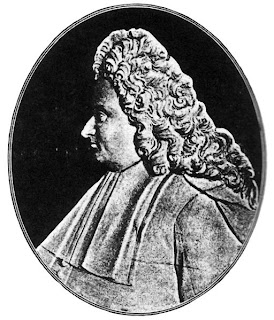
Antonio Maria Valsalva was an important Italian physician that was born in Imola in 1666. He was a contemporary of Newton, Bach and Molière and, following the traditions of his time, was educated in humanities, mathematics, and natural sciences. After his studies of the liberal arts, he studied Medicine and Philosophy at the University of Bologna, where he was a disciple of Marcello Malpighi, the founder of microscopic anatomy. Malpighi deeply respected Valsalva, who was his favorite student. And Valsalva was a great admirer of Malpighi. Portrait of Valsalva (Wikimedia Commons) Valsalva graduated from the medical school in 1687 and in 1705 was appointed Pprofessor of Anatomy at Bologna. He was later chosen as President of the Academy of the Sciences. His most important disciple was Giovanni Battista Morgagni, who edited Valsalva’s complete writings and published a biography of Valsalva in 1740. He was considered a very skilled anatomist and pathologist, a fine physician and ...

Porgy and Bess

Image
I was in my second year of medical school when they played Porgy and Bess here in São Paulo, at a theater that no longer exists. Of course I loved Rhapsody in Blue . Of course I loved George Gershwin’s popular songs, like Embraceable You, Someone to Watch Over Me , The Man I Love, and so on, and so on. Of course I had to go and see it. I did not have much money, so I bought a ticket on the highest part of the theater. I remember that on the main floor there were many very well dressed colored people. I was happy to see that in my town there was a high class of colored people, I did not know that they existed. I remember that the company had four Porgys and three Besses, because they had to sing for long periods of time and it was difficult for any single singer to do it every night. On my night Bess was Leontyne Price. She was very young then, of course you know how famous she became since then. Wikimedia Commons I was dazzled. I was flabbergasted. I still am when I hear S...