Posts

The Fenestration Era

Image
Otosclerosis is a fairly common disease, being found, histologically, in 10% of the human temporal bones. But the abnormal bone formation that characterizes the disease causes hearing losses in only one tenth of the persons that have inherited the disease, which means that only 1% of the population has hearing loss caused by otosclerosis. What happens in these persons is that the stapes is fixed by the abnormal bone formation, causing what we call a conductive deafness. The person does not hear well because a significant part of the sound energy does not reach the receptor cells of the inner ear. It is like the cataract in the eye: the opaque lens does not allow all of the light to reach the receptor cells in the retina. The stapes fixation was described by Valsalva in 1704. A famous English otologist, Joseph Toynbee, made a detailed description the stapes fixation in 1841, but felt that this was caused by infections. It remained for Adam Politzer to describe the histologic feature...

The Science of God

Image
My friend Sergio Carmona, an eminent neurologist from Argentina, sent me a very interesting book written by his friend Diego Golombek, who is professor of Physiology and Pharmacology at the University of Quilmes. The name of the book is “Las Neuronas de Dios” (God’s Neurons), and the author describes it as “a neuroscience of religion, spirituality and the light at the end of the tunnel.” His approach is quite original. He is not interested in conflicts between science and religion and he is convinced that to hypothesize incompatibilities between religion and science is a totally useless enterprise. His proposal is to study religions by means of scientific methods. His proposal is a study of the neuroscience of religion. In addition to God’s science and neurons, he also takes a look at God’s genes, God’s medications and God’s culture. He starts the book with a quotation forom Robert Pirsig, the American philosopher that wrote  Zen and the Art of Motorcycle Maintenance: When...

Jack Urban

Image
This is my first blog for 2016, and once again I want to thank all my readers and wish them a Happy New Year. A little late, isn’t it? But my wishes are sincere. Today I want to honor a friend that died many years ago. His name was Jack Urban. He was an optical and mechanical  engineer. Jack Urban (right) and Charles Graser, one of the first patients to receive a cochlear implant He developed many instruments for the House Medical Group in Los Angeles, including accessories for the surgical microscopes. But Jack was not the type of person from whom you would simply “order” something. He would come to the operating room so that he could understand what the surgeon wanted. And then he would manufacture a prototype and would again enter the operating room to see how it worked and whether he had to make any changes. Today many manufacturers of medical instruments sell “microdebriders,” often called “shavers.” These are instruments designed to cut and suction small bits of ti...

Beth-El on Broadway

Image
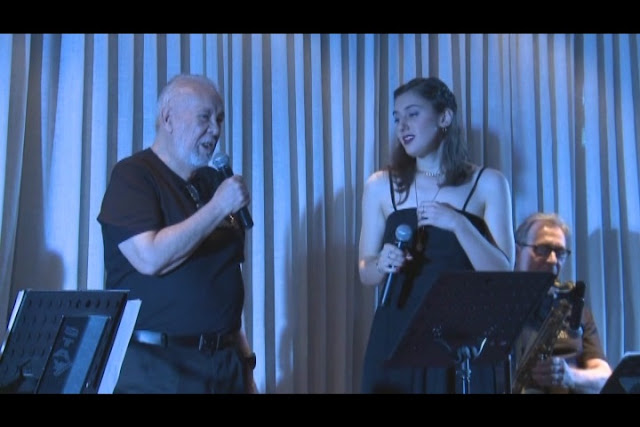
Most of the non-Jews (and maybe also some Jews) look at the synagogue as a kind of a church, a religious temple. Actually this word of Greek origin has  three different meanings: a house of prayer, a house of study and a house of reunion. Perhaps a musical show in a synagogue is not something usual, but cultural activities, lectures and conferences are rather common.  A couple of years ago I had an idea: to organize in my synagogue, Beth-El, a musical show to honor some important Jewish composers that made significant contributions to the Broadway musicals. The Jewish emmigration to the United States was very significant, and these immigrants made important cultural contributions to the country that received them so well. One of the areas that received a substantial contribution was music. The American music critics agree that five of the all-time Broadway composers were geniuses: Jerome Kern, Irving Berlin, George Gershwin, Cole Porter and Richard Rodgers. Of the five o...

When the Children Go to Sleep

Image
Richard Rodgers and Oscar Hammerstein II collaborated in several Broadway musicals. I think that the most successful were Oklahoma, South Pacific, The King and I and Sound of Music . But to me their masterpiece was Carousel . The music is beautiful, the story, based on a play by Ferenc Molnár, talks seriously about life and death. The songs If I Loved You and You’ll Never Walk Alone became famous, the latter is an inspired hymn that became very popular in religious services. But there are other songs that are definitely worth listening to, such as What’s the Use of Wondering, June Is Bustin' Out All Over and Soliloquy . One song that I particularly love is When the Children Go To Sleep . I found it in YouTube; it is actually a segment of the movie picture, sung by Barbara Ruick and Robert Rounseville. I am including its link on this page, in case you want to hear it. But what happens when children go to sleep? A drawing of a Dream Catcher There are some leg...

Einstein 60 - Personal Reminiscences

Image
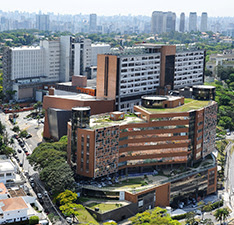
The Albert Einstein Israelite Hospital in São Paulo is now commemorating its 60th anniversary. The 60 years are being counted from the first meeting of the group of people who decided to build the Hospital, held at the house of the first President, Professor Manoel Tabacow Hidal. This group wanted to express the gratitude of the Jewish population of São Paulo for having been so well received and treated in the country where they chose to live. The Albert Einstein Hospital in 2015 The Hospital was officially inaugurated in 1971. In this year there was a Brazilian Congress of Otolaryngology in São Paulo and we had a Pre-Congress Course on ear surgery that was held at the Kleinberger Auditory of the Hospital. Professor Hidal, whom I knew from my medical school days, saw me during the lunch interval and invited me to visit the Hospital with him. We set a date about a week later and I joined him briefly at his office. Then we took an elevator to the 13th floor and visited each flo...

Georg von Békésy

Image
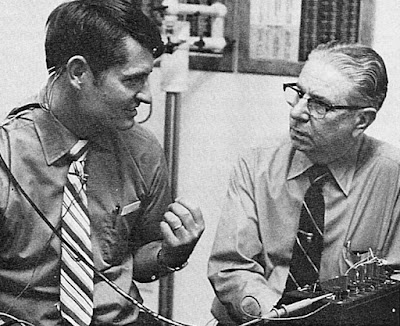
It is interesting to note that the two persons connected to Otolaryngology who received a Nobel Prize in Medicine were mainly interested in the ear and were both born in Hungary. I already mentioned Robert Bárány, who won the prize in 1914 and now we will talk about Georg von Békésy, who won the prize in 1961. Georg von Békésy * Békésy was born in 1899 in Budapest.  He studied chemistry in Bern and received his Ph.D. in physics from the University of Budapest in 1926. Before and during the Second World War he worked for the Royal Hungarian Institute for Research in Telegraphy, in Budapest, where he studied the signal quality in telecommunications and then became interested in the physiology of hearing. My professor of neurophysiology, Dr. Hallowell Davis, once told me that another great scientist, Professor Ernest Glenn Wever, the man who discovered the cochlear microphonics, visited Békésy in Budapest and, on his return, succeeded in convincing the professors of Harvard U...

Rainbow Room

Image
My wife and I were planning to celebrate my fiftieth birthday with a big party, inviting all of our friends. But this party never happened; my father died a few months before my 50th birthday, so we were in no mood for a party. We decided, then, not to spend that day in São Paulo and went to New York. And decided to commemorate it by dining and dancing at the Rainbow Room. I remember the Rainbow Room as a beautiful space, located on the 65th floor of one of the  Rockefeller Center buildings. The view of the city, from its many windows, was really something. I was told that for many years it was the highest restaurant in the United States. A few years after our dinner it was closed. But in 2012 it was declared a New York City landmark, and this led to its reopening in 2014. I have not returned there, but maybe I will be able to do it one of these days.  I do not remember what we ate there, I only remember that both my wife and I found the food excellent. But we will n...

Professor Emeritus

Image
On April 14, 2015 I was awarded the title of Professor Emeritus of the Escola Paulista de Medicina – EPM (São Paulo Medical School). This was my medical school. As they say in the United States, my Alma-Mater. My father was one of the founders of this Medical School, and I decided that this would be the school in which I would study Medicine. I spent six happy years there and graduated in 1955. After some training in otolaryngology here in São Paulo and in Rio de Janeiro, I spent three years at the Washington University in Saint Louis. I have been privileged to have had extraordinary teachers – Dr. Theodore Walsh, Dr. Walter Covell, Dr. Hallowell Davis, Dr. Richard Silverman, Dr. Ira Hirsh, Dr Joseph Ogura, Dr. Donald Eldredge, Dr. José Santiago Riesco McClure, Dr. Carl Sherrick Jr. ... And I was also privileged to do both clinical and research work in a rapidly changing specialty. There were other Brazilian otolaryngologists that were also specializing in otolaryngology in the ...

Carnival

Image
I am not particularly fond of Carnaval. I know that my country is famous for its Carnival, which attracts many tourists for these frenetic four days. But it is not a festival that I appreciate. But I have some good memories of a Carnival that I spent in Salvador, Bahia, when I was 18 years old, before the invention of the electric trios. And of the time when the songs written especially for Carnival were among the best Brazilian songs.  And, of course, there are the stories related to Carnaval. As that of the Benedictine priest who told me that as a young man in Recife – years before he joined the Seminary – he would leave his home on Friday evening with his umbrella and would return on the early morning of Ash Wednesday with only the ribs and stretchers of the umbrella. In order to dance the frevo, the typical Recife music, you need the umbrella to keep your balance. The story that I am going to tell you is a true one. I never met the main protagonist, but he was a close fri...

The Eyes and the Ears

Image
The world in which we live has beautiful scenes, beautiful landscapes, beautiful colors. They are pleasant to see, it is delightful to look at these things. Colors Nevertheless, I always told my students that the ears are more important for our everyday life than the eyes. Many of them did not believe me. My ophthalmologist friends do not believe me. There is no question that these are our two most important sense organs. But let us examine this problem in more detail. Mankind has something very important called Language. It allows us to communicate. It is something that we acquire with our ears. Congenital deafness makes it very difficult to acquire a language, we need a special education to obtain it. And acquiring a language is so important that most of the acquisition happens between the ages of two months and two years – an age we do not remember. But we do remember going to school and learning to read. To acquire a language is much more difficult for the Central Nervous S...

Robert Bárány

Image
Robert Bárány is the father of Neurotology, an area of Medicine that explores the boundaries of Otology and Neurology. He was born in Vienna on April 22, 1876. Vienna, at that time, was a part of the Austrian-Hungarian Empire.  His father, Ignaz Bárány, was a bank official. His mother, Maria Hock Bárány, was the daughter of a well-known Prague scientist, and it was her intellectual influence that was most pronounced in the family. Robert was the eldest of six children.  He studied Medicine at the Vienna University, graduating in 1900. After his graduation he spent one year in Frankfurt studying general medicine and then studied neurology and psychiatry in Freiburg. It was at this time that he became interested in neurological problems. Robert Bárány In 1903 he was appointed as “demonstrator” at the Otological Clinic of Vienna University, working with  Professor Adam Politzer. This was a very productive period, in which he created the caloric tests for studying t...

Francisco Mangabeira

Image
This time I will tell you about a grand-uncle that I never met. He had a very short life, he died when he was 25 years old. He was born in 1879 and died in 1904. He was a poet. He was also a physician and a soldier. Francisco Mangabeira Drawing by Maria Sílva Mangabeira Albernaz In 1968 my father wrote a book about him, called “Sonho e Aventura” (“Dream and Aventure”). I remember the time when he undertook the project of writing this book. He talked many times with his uncles João and Octavio, Francisco’s younger brothers, collected in Salvador many unpublished poems and writings and went to São Luís, in the state of Maranhão, to visit his tomb.  My father never knew his uncle; he only heard from his parents that Chico (as the family called him) had carried him when he was two years old. But Chico stayed many years in different areas and my father was 8 years old when the family received the news that Chico had died.  Now my nephew Eduardo Mangabeira Albernaz republis...