Posts

Our Book Has Been Published!

Image
Our aim was quite ambitious: we wanted to present what is new in Neurotology and, at the same time, express our Latin American experience in the specialty. And we wanted to emphasize the contributions of the recent neurophysiological advances to clinical Neurotology.  If you want to have a glimpse of our book, or even read a few pages, press one of the links that appear in the bottom of the page. Or press each one, one at a time.   We enjoyed writing this book. We hope you like it too. EU$ US$

Otology and Neurotology - Past, Present and Future - II

Image
Part II During the 48th Brazilian Congress of Otorhinolaryngology there was a presentation named The Future of Otolaryngology. I decided to include in my list of blogs this slightly expanded version of my presentation. Some of the names mentioned here have been presented in other pages of this blog. Ádám Politzer Politzer is celebrated as a pioneer of modern otology in the History of Medicine. For many years he was the Professor of Otolaryngology of the University of Vienna and attracted many physicians from different countries, influencing and training thousands of otologists from all over the world. He invented many medical instruments for the diagnosis and treatment of ear diseases. He created the ventilation tubes for the aeration of the middle ear after paracentesis and created the otoscope. He made the first observation that the middle ear ossicles vibrate to sound stimuli.  Wladimir Michailowitsch Bechterew An important Russian neurophysiologist, creato...

Otology and Neurotology – Past, Present and Future

Image
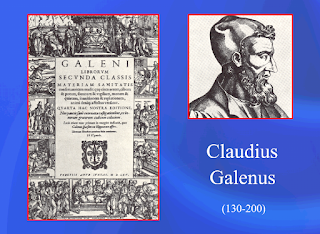
During the 48th Brazilian Congress of Otorhinolaryngology there was a presentation named The Future of Otolaryngology. I decided to include in my list of blogs this slightly expanded version of my presentation. Some of the names mentioned here have been presented in other pages of this blog. PART I Time is a relative dimension. The past, the present and the future are all interlinked. The things we do today are a consequence of the past, and the things we will do in the future are a consequence of what we do today. All journeys start with a first step. I include here some of the people I believe were responsible for first steps at different times.    Galen was a Greek physician who spent most of his life in Rome. He was born in 129 and died in 200. His concepts dominated medical science for nearly two thousand years.    He performed many anatomical studies, based on dissections of monkeys and pigs, since the Roman law prohibit...

Synapses

Image
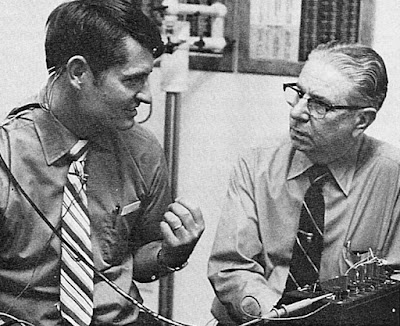
In the nervous system, a synapse is a structure that permits a nerve cell to pass an electrical or chemical signal to another nerve cell. The word comes from the Greek synapsis , which means “conjunction”, and was first employed by the English neurophysiologist Charles Sherrington in 1897. When I arrived in Saint Louis in 1958 and began to spend some afternoons at the Central Institute for the Deaf, Dr. Donald H. Eldredge – a neurophysiologist and also a good friend – told me a story concerning the synapses of the cochlear hair cells. With the advent of the electron microscope in the early 1950s, nerve endings were found to contain a large number of small vesicles. The term synaptic vesicles was given to these structures. He also told me that one of the researchers involved in electron microscopy had a special interest for quantum theory and made some calculations on the size of the vesicles. As predicted by Max Planck, the quantum mechanics are absolutely essential to deal with...

Neurotology and I

Image
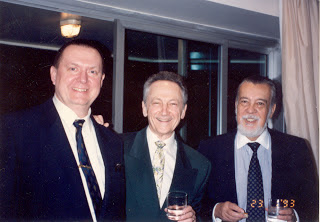
A long period of time has elapsed since my last blog. I ask my readers to apologize me. I had the idea that in my old age I would have less work to do and plenty of leisure time. It is not so. It seems that I have more and more things to do. But I cannot complain, because I love my work. One of my Neurotology professors, Dr. Wallace Rubin, has died recently. He was a very good friend and we visited each other many, many times. We have been together in New Orleans, where he lived, but also in Chicago, Los Angeles, New York, Palm Beach, Cancún, Bad Kissingen and, of course, in São Paulo. Maybe it is because of him that I am now reminiscing about my adventures in Neurotology. For my readers that are not physicians or audiologists, this is the interface between Otology and Neurology. We deal with the labyrinth. We mainly treat vertigo, disequilibrium and unsteadiness. Dr. Claus-Frenz Claussen, Dr. Wallace Rubin and I My first Professor of Neurotology was Dr. José Santiago Riesco Ma...

The Fenestration Era

Image
Otosclerosis is a fairly common disease, being found, histologically, in 10% of the human temporal bones. But the abnormal bone formation that characterizes the disease causes hearing losses in only one tenth of the persons that have inherited the disease, which means that only 1% of the population has hearing loss caused by otosclerosis. What happens in these persons is that the stapes is fixed by the abnormal bone formation, causing what we call a conductive deafness. The person does not hear well because a significant part of the sound energy does not reach the receptor cells of the inner ear. It is like the cataract in the eye: the opaque lens does not allow all of the light to reach the receptor cells in the retina. The stapes fixation was described by Valsalva in 1704. A famous English otologist, Joseph Toynbee, made a detailed description the stapes fixation in 1841, but felt that this was caused by infections. It remained for Adam Politzer to describe the histologic feature...

The Science of God

Image
My friend Sergio Carmona, an eminent neurologist from Argentina, sent me a very interesting book written by his friend Diego Golombek, who is professor of Physiology and Pharmacology at the University of Quilmes. The name of the book is “Las Neuronas de Dios” (God’s Neurons), and the author describes it as “a neuroscience of religion, spirituality and the light at the end of the tunnel.” His approach is quite original. He is not interested in conflicts between science and religion and he is convinced that to hypothesize incompatibilities between religion and science is a totally useless enterprise. His proposal is to study religions by means of scientific methods. His proposal is a study of the neuroscience of religion. In addition to God’s science and neurons, he also takes a look at God’s genes, God’s medications and God’s culture. He starts the book with a quotation forom Robert Pirsig, the American philosopher that wrote  Zen and the Art of Motorcycle Maintenance: When...

Jack Urban

Image
This is my first blog for 2016, and once again I want to thank all my readers and wish them a Happy New Year. A little late, isn’t it? But my wishes are sincere. Today I want to honor a friend that died many years ago. His name was Jack Urban. He was an optical and mechanical  engineer. Jack Urban (right) and Charles Graser, one of the first patients to receive a cochlear implant He developed many instruments for the House Medical Group in Los Angeles, including accessories for the surgical microscopes. But Jack was not the type of person from whom you would simply “order” something. He would come to the operating room so that he could understand what the surgeon wanted. And then he would manufacture a prototype and would again enter the operating room to see how it worked and whether he had to make any changes. Today many manufacturers of medical instruments sell “microdebriders,” often called “shavers.” These are instruments designed to cut and suction small bits of ti...

Beth-El on Broadway

Image
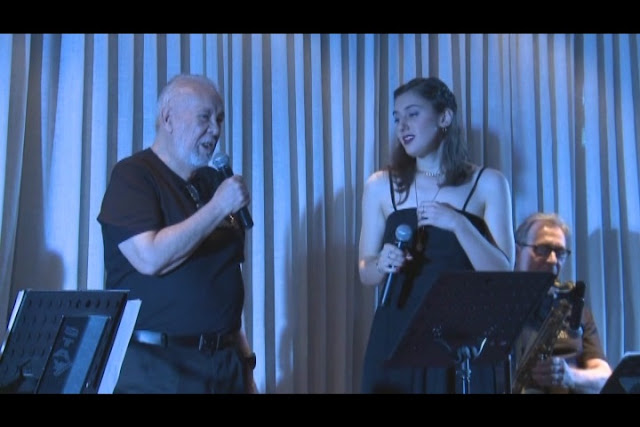
Most of the non-Jews (and maybe also some Jews) look at the synagogue as a kind of a church, a religious temple. Actually this word of Greek origin has  three different meanings: a house of prayer, a house of study and a house of reunion. Perhaps a musical show in a synagogue is not something usual, but cultural activities, lectures and conferences are rather common.  A couple of years ago I had an idea: to organize in my synagogue, Beth-El, a musical show to honor some important Jewish composers that made significant contributions to the Broadway musicals. The Jewish emmigration to the United States was very significant, and these immigrants made important cultural contributions to the country that received them so well. One of the areas that received a substantial contribution was music. The American music critics agree that five of the all-time Broadway composers were geniuses: Jerome Kern, Irving Berlin, George Gershwin, Cole Porter and Richard Rodgers. Of the five o...