Posts

Singapura

Image
I had a very interesting meeting in Singapore a few weeks ago. It was a long trip. I flew from São Paulo to Doha, in Qatar, a 14 hours direct flight. I waited there for three hours and then took another plane to Singapore, a 7 ½ hours flight. Of course I had a severe jet lag; local time in Singapore is 11 hours ahead of that of São Paulo. Consequently I was very sleepy in the afternoons, but I had a couple of days to get adjusted, so I was not sleepy on the day of the meeting.    This was a Steering Committee meeting, a group of people whose task was to supervise a medical research. There were two people from Holland, one from Switzerland, two from England, one from Russia, two from Singapore. A professor from India could not come but we could hear him and talk to him through a telephone conference. We convened from 9:00 AM to 4:00 PM, with a brief interval for lunch.  We did not know each other; we met at a dinner on the eve of the meeting. As each of us returned ...
Image
Many years ago I read a mystery book by Edgar Wallace and I remember that he described his detective, a Scotland Yard inspector, as being “very old.” He added that he was “more than fifty.” I think that the concept of old age is gradually changing. Nowadays people stay young much longer. Still I often see relatively young patients who feel old and old patients who, surprisingly, feel and act as though they were very young. After fifty, I think the age that counts is the age that people feel and project, not the age that is counted in years. I am also remembering a book that I read a long time ago, called “The Way of All Flesh,” a wonderful autobiographical novel written by Samuel Butler. One of most beautiful statements that he makes in his book is that “spring, like youth, is an overpraised season.” He felt very happy in the autumn of his life. Also one of the most beautiful of Frank Sinatra’s records is called “The Autumn of My Years.” An interesting and important char...

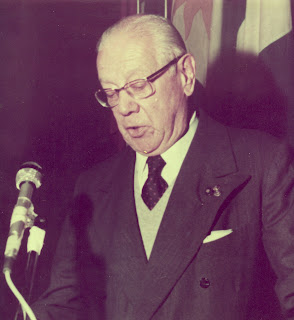
Prof. Paulo Mangabeira Albernaz

Image
Some Notes About My Father My father was born in Bagé, in the state of Rio Grande do Sul, grew up in Salvador, in the state of Bahia, and lived most of his life in Campinas, in the state of São Paulo. His parents were from Bahia. The reason he was born in Bagé is that his father was an army physician and was sent to many different places; my grandfather and my grandmother moved back to Salvador when my father was two years old. I never met my paternal grandfather. He died of a congenital heart disease when he was 39 years old. My father told me that one day he brought home a pulse plethysmograph, a spring operated device that recorded pulse. My father was in the third year of medical school but had never seen this instrument and was curious about it. So my grandfather took a piece of paper, blackened it with the smoke of a candle and attached it to the plethysmograph. Then he placed his finger on the instrument and set it in motion. The recording needle added a white tracing to t...

The Big Bands

Image
I remember reading an article in a magazine called High Fidelity , that no longer exists, that showed sonograms of recordings by musicians and singers. The author compared Louis Armstrong singing and Louis Armstrong playing his trumpet. There was a remarkable similarity in the tracings. That is not surprising. What I did find surprising is that the sonograms of Tommy Dorsey playing the trombone and Frank Sinatra singing were also quite similar. Sinatra often mentioned that he learned to breathe listening to Tommy Dorsey’s trombone. But it is not only that. He also learned phrasing with Tommy Dorsey. These curious findings remind me of the time of the big bands. I was about 10 years old when I began to listen to the 78 rpm records that my older brothers bought.  This was the time of the big bands, and I loved them. We listened to Tommy Dorsey, Artie Shaw, Benny Goodman, Harry James, Glenn Miller, Jimmy Dorsey... And also Duke Ellington, Woody Herman, Jimmie Lunceford... Not o...

The Man Who Taught Me to Think

Image
One of these days I saw a young woman who had dizzy spells and was feeling quite uncomfortable with her symptoms. In fact, the sensation of vertigo is something terrible, particularly when the first episode is intense; many patients feel that they are going to die.  But this young woman had been seen by several doctors and had been submitted to several tests. When I asked her to describe her problem she told me all about the visits to the other doctors and the medicines that had been prescribed. “Let us start at the beginning,” I said to her, “and try to tell me what you feel when you have a spell, and how long does it last, and what you do about it. This is like a Sherlock Holmes story, you know? He always tells his clients that he must know all of the details, even those that apparently bear no relation.” There is a serious risk that detailed clinical histories will soon become extinct. Modern medicine is too much involved with an extraordinary amount of technological pr...

Professor Pedro de Alcantara

Prof. Pedro de Alcantara Marcondes Machado was a famous pediatrician in São Paulo. He was one of the founders of my Medical School, the Escola Paulista de Medicina (EPM). My father was also one of the founders of EPM and they were very good friends. I met Prof. Alcantara when I was in my second year of medical school, on a day that he was invited to have lunch with my parents, in our home. A few years later he became my professor. I believe that our class was the last one that he lectured at EPM.  He was Professor of Pediatrics at the São Paulo Faculty of Hygiene, at EPM and at the University of São Paulo Faculty of Medicine. He published many books, wrote many papers, contributed enormously to change many concepts in pediatrics and puericulture. As it happens with all pioneers, he often had to fight vigorously for his ideas, that are now part of the everyday practice of pediatricians. But besides being a great scientist, he was a great human being, and very friendly. Duri...

Fallopio

Image
Gabriele Falloppio was one of the great anatomists of the sixteenth century, a follower of Vesalius. He as born in Modena in 1523 and died in Padua in 1562. He belonged to a noble family that was, however, very poor. The family’s financial difficulties made him join the clergy. In 1542 he became the canon at Modena's cathedral. He then decided to study medicine, graduating at the University of Ferrara in 1548. Portrait of Fallopio - Wikimedia Commons On receiving his degree he became professor of Anatomy in Ferrara, then at the University of Pisa in 1549 and in 1551 moved to the University of Padua where he worked until his death. He was also a professor of botany and was superintendent of the botanical gardens. His accomplishments in anatomy were quite important, even though he died before reaching the age of 40; the cause of his death is unknown. He was noted for his modesty and deference to his fellow workers and especially to Vesalius. Whenever his studies led to diff...

Fireside Conferences

Image
In 1965 I went to Tokyo for my first World Congress of Otolaryngology. It was a big adventure.  I flew from Campinas to Lima, then to Los Angeles, on a Varig Boeing 707; spent a night on a hotel near the LA airport, then flew from LA to Tokyo in a Japan Air Lines DC-8, with stops on Honolulu and Wake Island. I remember leaving LA at 10:00 AM and arriving in Tokyo at 5:00 PM of the following day. It took me three days to be able to sleep. A 12-hour jet leg is difficult to overcome, even though I was young. The Meeting, however, was excellent, and very well organized. There was a small group of Brazilians attending the Meeting. One of them was a Nissei – a first generation Brazilian born Japanese. His name was Miiko Imamura. On the first day of the Meeting he took me and some other Brazilians for a quick lunch in a small restaurant close to the Convention Center. He talked to the waiter in fluent Japanese and the waiter took us to a nice table and brought menus for all of us...

An Old Speech

Image
In 2004 Prof. Ricardo Bento and I organized the first (and only) meeting of the Collegium Oto-rhino-laryngologicum Amicitiae Sacrum held in the southern hemisphere. I had the opportunity to welcome the members of the Collegium to Costa do Sauipe, near Salvador, where the Meeting was held. I was looking at old papers in my office and found this speech, that was not published. I would like to share it with you. My wife and I at the opening of the Collegium Meeting in Bahia A little more than 500 years ago a group of Portuguese sailors, commanded by Pedro Alvares Cabral, landed not very far from here, officially discovering Brazil. Two years previously they had found the sea route to India. I feel that they were as brave and intrepid as the men who now venture in outer space. They did not know how to measure longitude. In order to know where they were they had to rely on logs of previous voyages and on the beautiful stars of the southern hemisphere skies, such as the Souther...

The Festivals of the Lights

Image
Festivals are quite characteristic of the human race and, therefore, have been in existence for many, many centuries. All of the religion scholars agree that the “new” religions evolved from older ones. And the “new” ones adapted the old festivals to their own concepts. This is the reason that all of the present religious festivals have prehistorical roots. The most important old festivals were those of the spring equinox, the winter solstice and the harvests. We recently enjoyed a “new” harvest festival, particularly important in the United States and not really linked to any special religion, in spite of the fact that we are basically thanking God for the blessings that He bestowed on us. Thanksgiving is a very meaningful festival that I particularly enjoy. We are now approaching the winter solstice. It seems that this festival originated in the Scandinavian countries, where the days become definitely shorter as the solstice approaches. And people would light fires and pray tha...

Eustachius

Image
Bartolomeo Eustachi was one of most important anatomists of the sixteenth century. He is more commonly referred to by his Latin name, Eustachius. He was born in San Severino, in Italy, around 1510. He was a contemporary of Vesalius, with whom he shares the reputation of having created the science of human anatomy. His father, Mariano, was a physician, and he gave his son a classical education. He studied Greek, Hebrew, and Arabic. He studied Medicine in Rome and began his practice around 1540. He became a professor of anatomy at the Archiginnasio della Sapienza, in Rome and, because of his position, he was able to obtain human cadavers for dissection. Religious reverence for the body made the Roman Catholic Church prohibit the dissection of  human corpses for many centuries. Following the Black Death Plague, however, the Popes wanted to know the cause of the disease and permitted postmortem examinations of plague victims. But it was almost 200 years later that Pope Clement VII, in ...

Noise Induced Hearing Loss - NIHL

Image
Our ears are sensitive to loud noise. We may acquire a hearing loss from acoustic trauma, such as explosions, gun shots, and similar sudden loud noises, or we can get hearing loss from repeated sound stimulation, as working in a factory with machines that produce loud noises. In the past hearing losses were related to some old professions, like blacksmiths and makers of metal pans and pots. During the II World War acoustic trauma and noise induced hearing loss became a serious problem. Soldiers were affected by loud sounds from artillery (guns, cannons, granades), explosions of shells and bombs. Pilots were constantly exposed to the noise of their airplanes. The Department of Otolaryngology at Washington University in Saint Louis was commissioned by the United States Army Air Force to make an experimental study on acoustic trauma, hoping that understanding the involved mechanisms would help to establish adequate mechanisms of prevention. These studies led to interesting neurophys...

The Lusiads

Image
Today it is not about Medicine. It is about Literature. “The Lusiads” is an epic poem written by Luís Vaz de Camões, the most famous of  Portuguese poets. He is considered the best epic poet of all Portuguese literature and also the best lyric poet of his time. I remember reading a book by William Somerset Maugham in which he tells us of a man that he met somewhere in the South Seas who was writing a new translation of “The Lusiads.” “It is the best epic poem ever written,” said the man to Maugham. “It tells much more than all others. The Iliad is all about the Trojan War. The Odyssey is merely Ulysses’ return travel to Greece. The Aeneid is just Aeneas trip from the destroyed city of Troy to Italy. “But ‘The Lusiads’, although focused on Vasco da Gama’s discovery of the route to India, tell us all of the history of Portugal. Unfortunately it is written in a language that few people read and the existing translations are not good.” The poem was first published in 1572 an...

Microsurgery

Although Malpighi began to use the microscope for anatomical studies in the 1600's, almost three centuries elapsed until it began to be used in the operating room. Microsurgical techniques are now employed in several areas of Medicine. But we, ear, nose and throat specialists, are proud to have been the ones who started using these techniques. A Swedish otolaryngologist, Carl-Olof Siggesson Nylén (1892-1978), was the father of microsurgery. In 1921, in the University of Stockholm, he built the first surgical microscope, a modified monocular Brinell-Leitz microscope. At first he used it for operations in animals. In November of the same ear he used it to operate on a patient with chronic otitis media who had a labyrinthine fistula. Nylén was particularly interested in Neurotology and is well known for describing a disease that he named vestibular neuritis, a sudden loss of function of one of the labyrinths. Nylen's microscope was soon replaced by a binocular microscope, develope...

Malpighi

Image
Marcello Malpighi was the first anatomist to incorporate the microscope in his studies. Marcello Malpighi - Wikimedia Commons The microscope was invented by Hans Jansen, a Dutch spectacle-maker, in 1590 and was modified by Galileo in 1609. Its possibilities for biological studies, however, came approximately 50 years later, when Robert Hooke improved it. Then Malpighi, Hooke, Nehemiah Grew and Antoine van Leeuwenhoek  began their investigations using the new tool. Hooke studied mainly insects, and was the creator of the word cell for describing biological organisms. Grew was a vegetable anatomist. Leeuwenhoek manufactured many microscopes (of high quality for that time) and actually made important discoveries, such as bacteria   (large Selenomonads from the human mouth), the vacuoles of the cells, the banded pattern of muscular fibers and the spermatozoa (for this discovery he had serious disagreements with the Dutch theologists). Hooke's microscope, employed by Malpi...

Wallace Rubin, M.D.

Image
In 1966 I wrote a thesis to become an Associate Professor in Otolaryngology at my Medical School and wrote a paper reporting the most important findings. This was published  in The Laryngoscope*. Soon after the publication, I received a letter from Dr. Wallace Rubin, congratulating me for the paper. I had heard of him and had read many of his papers, but we had never met. I was happy to receive a compliment, at the beginning of my career, from a well known physician with whom I had had no personal contact. In 1971 he was invited to a Congress in Brazil. We were together several times during the meeting, some of them with our wives. We became good friends. My wife and I used to stay in his home when we traveled to New Orleans and Elsie and Wally stayed in our home when they came to São Paulo. In 1976 he asked New Orleans Mayor to make me an Honorary Citizen of the city; this certificate is proudly hanging from one of the walls of my office. When we went to New York they would fl...

Italian Renaissance

Image
Renaissance was a cultural movement that began in 14th century in Florence, in the Late Middle Ages, and lasted three centuries, spreading to all Europe. It probably arised from the rediscovery of Greek, Roman and Arabic classical texts on natural sciences, philosophy and mathematics, leading to a sudden flowering of literature, science, art, religion, education and politics. Renaissance brought progress in many areas, even if it is better known by its artists. The Renaissance scholars employed the humanist method of study, and searched for realism and human emotion in art. Science and art were intermingled in the early Renaissance, with artists such as Leonardo da Vinci studying anatomy to improve the quality of his paintings and sculptures. Dissections of human cadavers were strictly prohibited by the Roman Catholic Church, but Da Vinci performed them. The illustration depicted here shows one of his anatomical drawings. It is quite possible that Michelangelo did the same. The “secr...