Posts

The Tectorial Membrane
Image
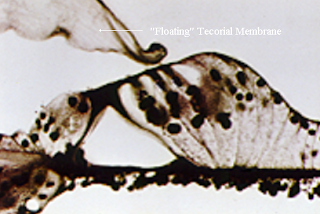
One of the important anatomists of The University of São Paulo, Prof. Olavo Marcondes Calazans, once told me that Anatomy books have many mistakes. This happens because, during his lifetime, an anatomist studies thoroughly only a limited number of subjects. The others he copies from other books. This may help to explain why certain mistakes are sometimes repeated throughout the years. One such example is the tectorial membrane, an important part of the organ of Corti. The section seen in Fig. 1 shows a “floating” tectorial membrane, but this is a fixation artefact. Fig 1. A histological section of the organ of Corti Anderson Hilding performed precise dissections of the organ of Corti in guinea pigs and stated unequivocally that the tectorial membrane is attached both to the limbus spiralis and to Hensen’s cells. He published this in 1953! An yet most of the pictures of the inner ear continue to show a floating tectorial membrane (see Fig. 2). Fig. 2. A drawing of the organ of ...

Central Auditory Masking

In Audiology the word masking denotes the presence of a sound that interferes with another. Since we live in a world filled with sounds, there is always some masking when we are talking or listening. In some circumstances there is more masking. A good example is a cocktail party: we may be talking to one person and in the background we hear other people talking, music, waiters clashing dishes, and so on. For audiological tests we use well defined types of noise as masking devices. Most of the masking effects occur in the inner ear, but it can also occur in the central auditory pathways (the route from the inner ear to the brain). During my third and last year in Saint Louis I spent three weeks at the Research Department of the Central Institute for the Deaf, involved in audiological research. I felt that this would somehow complement my years of training and it was a very pleasant experience. Carl Sherrick, an experimental psychologist, was doing some experiments with pulsed stim...

Maimonides

(History of Medicine ... 5) His Hebrew name was Moshe ben-Maimon, in Arabic he was Musa ibn Maymun. In Latin he became Maimonides. He was an important medieval Jewish philosopher, one of the greatest Bible scholars and physicians of the Middle Ages. He was born in Córdoba, Spain, in 1135, and died in Egypt in 1204. He wrote so extensively that Abraham Joshua Heschel, a 20th Century Jewish philosopher, used to say that “if we did not know that Maimonides is the name of a man, we might think it was the name of a university.” When the Almohads conquered Córdoba in 1148 Maimonides’ family escaped to Morocco an then the Holy Land and then Egypt, where he later became the Sultan’s physician. He wrote ten medical books, all published in Arabic. He described many conditions including asthma, diabetes, hepatitis, and pneumonia, and emphasized moderation and a healthy life style. His treatises became influential for many generations of physicians. He knew the Arabic translations of Greek a...

Dashiell Hammett

Dashiell Hammett was the creator of the “hard boiled” detective stories. As it often happens with pioneers, the quality of his work was underestimated during his life. Now he is regarded as one of the finest mystery writers of all time. Hammett left school when he was 14 years old and had several jobs: messenger, paper deliverer, night watcher, production foreman, stevedore and industrial machine operator. From 1915 to 1922 he worked for Pinkerton National Detective Agency and it was this job that supplied him many of the ideas that he used as a writer. Hammett had his own code of ethics, that transcended the ordinary laws and rules. A good example of his ethics can be observed at the end of one of his short stories, when the girl who had schemed the criminal operation is unmasked by the detective who tells us everything in the first person and does not even have a name: “No one else knows what you know...”, she said. “There is a wealth in that cellar beneath the garage. You may ...

A Color Picture in a Medical Journal

Image
I had finished my Master’s Degree thesis, at Washington University in Saint Louis, which was on histochemistry of the cochlea, and the most important finding was the presence of acid mucopolysaccharides in the vicinity of the distal ends of the internal and external cochlear hair cells following noise exposure. Dr. Walter Covell, my advisor, and I went several times to the illustration department of the WUSL Medical School and tried all sorts of tricks and all types of filters. We could not show these findings in a black and white picture. I asked Dr Covell if it would be possible to include a color picture.  He did not know, but told me that he had never seen a color picture in a Medical journal. The office of the Laryngoscope, which was edited by Dr. Theo Walsh, was next to Dr. Covell’s office at the McMillan Hospital, so we went there to check. They did not know, either, but they would check with the printers. The printers said that it would be possible to print a separat...

Avicenna

(History of Medicine ... 4) Avicenna – the Latin name of Abu Ali al-Husayn ibn Abd- Allah ibn Sina – was a Persian physician, who lived from 980 to 1037. In those days the amount of available information was more limited, which made it possible to acquire a very diversified range of knowledge. Besides being a physician, Avicenna was astronomer, chemist, geologist, psychologist, Islamic theologian and scholar, paleontologist, mathematician, physicist and poet. He wrote extensively. Forty of his books that were not lost are related to Medicine. The most famous are The Book of Healing, a scientific encyclopedia, and The Canon of Medicine, a complete textbook based on the principles of Galen and Hippocrates. The Canon of Medicine was used as a text book in the universities of Montpellier and Louvain until 1650. Among Avicenna’s “firsts”: •    The discovery of contagious and sexually transmitted diseases. •    The introduction of experimental medic...

The Diamonds at the Chinese Monastery

This is one of my favorite stories. It was told by Erle Stanley Gardner, the man who wrote the Perry Mason books. He had traveled to China and wanted to express his appreciation to the people who received him so well. Since his specialty was writing detective stories, he decided to write a special one as a tribute to China. The detective’s name was Terry Clane. He lived in San Francisco and fell in love with his best friend’s wife. So he decided to run away. Seeing in Chinatown an advertisement that a Chinese Buddhist Monastery was offering free diamonds, he immediately boarded on a boat to China. One day, back in San Francisco, he was dining with a young woman and told her about the diamonds. “Was it true?” she asked. “Yes,” he said. “I saw the diamonds. But I had to stay in the Monastery for three years in order to get them. I had nothing to do, so I stayed there for three years.” “And did you get the diamonds?” “No. They are still there. After my three years in the Monas...

Otosclerosis

Image
Otosclerosis is a bone disease that affects human temporal bones. An orthopedist, Howard Frost, compared it to a demolition, which contains all of the materials of a house but has no architecture. Normal bone has a precise architecture, otosclerotic bone does not. In about 10 per cent of the patients, otosclerosis  produces a hearing loss due to a fixation of the stapes, that interferes with the transmission of sound from the middle ear to the inner ear. In a smaller percentage of cases there is inner ear hearing loss, related to larger amounts of diseased bone in the cochlea. When I was in Saint Louis I became involved with histochemistry of the cochlea, which was the subject of my Master’s thesis. When Dr. Theo E. Walsh began to do stapedectomies – operations to replace the stapes with a prosthesis in patients with otosclerosis – I asked him to give me the stapes footplates for histochemical studies. The histology of otosclerosis was well known, but it had been studied only i...

Galen

(History of Medicine ... 3) Galen was a Greek physician who spent a long period of his life in Rome. He was also a philosopher and probably  the most important medical researcher of his time. He was born in Pergamon in 129 and died in Rome in 200. Galen's medical theories dominated medical science for nearly two thousand years. He performed many anatomical studies, based on dissections of monkeys and pigs, and these studies were accepted until 1543, when Vesalius published his De Humani Corporis Fabrica . It must be noted that Roman law prohibited the dissection of human cadavers. In spite of his many mistakes, the descriptions that we find in his writings were extremely rich in details. We do not know whether he was a good clinical observer, because, unlike Hippocrates, who reported both his successes and his failures, Galen reported only his successes. He was also known for employing many medications derived from different plants and prepared by himself and designed many ...

The American Otological Society

Image
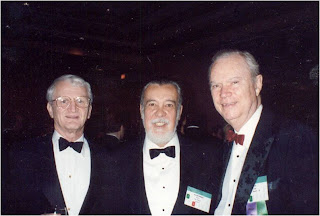
I was in Los Angeles for a COSM Meeting in 1993. My wife and I were calmly watching television in the morning when the telephone rang. It was Bill House. “Marlene,” he said, “I was at the Business Meeting of the Otological Society and Pedro was nominated an Honorary Member. You two must come to the dinner tonight. It will be a formal dinner.” I was flabbergasted! Becoming an Honorary Member of such an important Society was much more than I ever could expect. And I had no tuxedo. What was I going to do? But when Bill House says “you must come” one just has to do it. My wife calmed me down. She called the hotel’s concierge and he found us a place where I could rent a tuxedo. And we went to the dinner. At the AOS Dinner, between two good friends, Drs. Eugene Myers (left) and William House (right). The American Otological Society was founded in 1868 and has had annual meetings since then, except for one year in which there was a railroad strike and two years during the Second World War b...

Hippocrates

(History of Medicine ... 2) The Greeks offered us more than beautiful legends and a physician who was a God. They also gave us the Father of Medicine. Hippocrates was the first man who believed that diseases did not result from punishments inflicted by the Gods. He assured his disciples that they resulted from natural causes, environment and habits.  Because of these concepts he was arrested, spending 20 years of his life in prison. It was during these years that he wrote most of his texts on Medicine. He was born in the island of Kos around the year 460 BC and lived for 83 or 90 years, according to different sources. He also established the Ethics of medical practice; parts of his oath are universally read by the young doctors when they graduate from Medical School. In the old days it began like this: I swear by Apollo the physician, and Asclepius, and Hygieia and Panacea, and I take to witness all the gods and godesses that, according to my ability and judgement, I will...

Collegium ORLAS

Image
The Collegium Oto-Rhino-Laryngological Amicitiae Sacrum was founded in the Netherlands by Professors Charles Emile Benjamins, from Groningen, and Adriaan De Kleyn, from Utrecht. The reflections of the First World War were still dividing scientists of different countries, and they wanted them to join again. After all, wars are created by politicians, not by scientists. They also wanted meetings with a small number of people, both for achieving a high scientific level and to stimulate friendship among the associates. They wrote a letter inviting members of different countries and the first Meeting happened in Groningen, in 1926. It gradually became the most prestigious of the otolaryngological societies. I was invited to join the Collegium in 1982. My first Meeting was in The Hague, the President was Prof. L. B. W. Jongkees, the Secretary-General was Prof. C. R. Pfaltz, from Basel, who held this post from 1977 to 1986. Queen Beatrix came to the opening ceremony of the Meeting.  Que...

The Labyrinth

According to Greek mythology there was in Crete a Labyrinth designed and built by a legendary architect, Daedalus, for King Minos. Its structure was so complex that not even Daedalus succeeded in escaping from it. When the old anatomists began to study the temporal bones, they found it so complex that they called it “a labyrinth.” They knew that part of it was auditory, the other part, the vestibular system, remained a mystery for many centuries. The reason is simple. The vestibular sensors record accelerations, and accelerations were not known until Newton discovered gravity in 1687. It was only in 1830 that the function of the vestibular receptors was thoroughly studied by a French neurophysiologist, Jean Pierre Flourens. And only in 1861 Prosper Menière postulated that the sensation of vertigo was caused by a labyrinthine disease. Today everyone that has an episode of vertigo tell us that he has a labyrinthitis. In fact, what they have is one of the many kinds of disorders o...

Hallowell Davis

One of my teachers, Dr. Hallowell Davis, was an extraordinary scientist. And also an extraordinary human being. He was Director of Research at the CID (Central Institute for the Deaf), in Saint Louis. During his Harvard days, in the 30's, he helped to develop electroencephalography. At CID he studied cochlear physiology and, among many other things, discovered the summating potentials. He was the father of electric response audiometry, on which he was already working when I left Saint Louis. I remember saying in a meeting, in the late 60's, that soon we would be able to measure auditory thresholds in children using computers. Everyone thought that it was my imagination, that I was too involved in science fiction... One of my theses, The Evolution of a Sensory Organ , was almost totally based on Dr.Davis’ teachings. Besides being a great neurophysiologist, he also had an extraordinary sense of humor. On the wall of his office at the Central Institute for the Deaf was a s...

The Albert Einstein Hospital in São Paulo, Brazil

Image
In 1971 I began to work at the Albert Einstein Hospital. I still remember the day that the Hospital’s President, Prof. Manoel Hidal, showed me everything, from the 13th to the ground floor. Hospital rooms, operating suites, laboratories, auditorium, laundry, emergency electrical generator... everything. There was only one building at that time. I have watched it grow continuously, to become the best hospital in Latin America (and one of the best of the world) and an important research center. In 1976 I organized a the first Brazilian Meeting totally dedicated to the problems of sensorineural hearing loss. The Guest of Honor was Dr. William House, and for the first time in our country he told us of his experience in cochlear implants. Opening ceremony of the Symposium on Sensorineural Hearing Loss. From left to right: Pedro L. Mangabeira Albernaz, William F House, Max Feffer, Manoel Hidal, Marco Elisabetsky In 1977 I performed the first cochlear implant in Brazil – the second perf...

Saint Louis, Missouri (1)

Image
I went to Saint Louis in 1958 and stayed there for three years, as a fellow of the Department of Otolaryngology of  the Washington University School of Medicine. My activities were divided: twice a week I worked with Dr. Theo E. Walsh in the operating rooms and in his office; in the other three days I worked in my own histopathology lab, from which my first published papers originated, as well as my Master’s degree thesis. For my last year I was appointed Research Assistant in the Department. The Central Institute for the Deaf, the first oral school for deaf children in the United States, was just a few blocks away, and every Thursday afternoon there was a seminar in the research Building. There I met many prominent scientists. I will tell you some stories of my times in Saint Louis.

Medical School Hospitals

The concept that a Medical School must have a Hospital seems to be obvious. And yet, these Hospitals are fairly recent. The first one belongs to Johns Hopkins University and was completed in 1889. The Johns Hopkins Medical School had four famous professors: William Osler (Internal Medicine), William S. Halsted (Surgery), Howard Kelly (Gynecology) and William H. Welch (Bacteriology). William Osler established the first medical residence and was the first medical professor to take his students to the patients’ beds. For these pioneering acts he is considered the Father of Modern Medicine. One of his sayings is, to me, an extraordinary example: The mistakes that I committed were faults of my mind, not of my heart. The first Medical School Hospital in Brazil was built by a small private Medical School that was at that time fighting to survive: the Escola Paulista de Medicina. Its Hospital was inaugurated in 1938.

A History of Medicine (1)

I was recently invited by the Rio de Janeiro Otolaryngological Society to give a conference entitled: Otology – Past, Present and Future. I will start my blog with the beginning of the conference. In the old days everything was simple... Medicine was born in Greece. Asclepius, who was god, learned it from a centaur. And the “treatment” of the diseases consisted in spending a night in on of the Asclepius temples. During the night the God would enter into the patient’s dreams and cured him. But the Greeks had a precise notion that Medicine should not cure all patients. Hades, the god of Hell, complained to Zeus that no more dead spirits were coming to the underworld, for Asklepius did not allow them to die. Zeus, then, fulminated Asclepius with a thunderbolt. This is what Governments and Insurance Companies are attempting to do with present day Medicine.