Posts

Conditioning

For many years the measurement of hearing in small children had been a serious challenge. Hearing is the most important of our sense organs, the basis of language and communication. I used to tell my students in Medical School that we remember learning to read and write, but we do not remember learning to speak, which is much more complicated. Reading and writing is simply a representation of our speech with symbols. Learning to speak is a much more difficult task for our nervous system, a task that starts when we are born. The period of time from two months to 30 months of age is the most intense activity in acquiring language. In the old days most of the hearing tests in young children could only be done by conditioning . There are two types of conditioning, the classical , or pavlovian type, developed by Ivan Pavlov in 1927, and the instrumental type, developed by Edward Thorndike and extensively revised by B. F. Skinner. In Pavlov’s classical experiment the dogs were conditioned ...
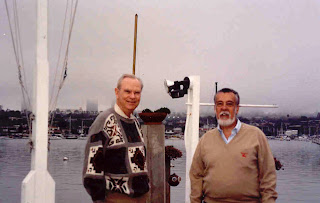
William F. House, M.D.

Image
Bill House is my guru, my otological model, my friend. Most probably his name will appear many times in this blog. His associate Jim Sheehy used to say that he is a “far out thinker.” His inventive capacity has no limits. He changed otology and neurotology. Making changes in Medicine is a complex thing. Many people resent it. Many people  make unfavorable comments. Many people try to block progress. The history of otology tells us that all new procedures were severely criticized before becoming standardized techniques. I am happy that Bill decided to write a memoir telling us how controversial most of his work was, something that young otologists do not realize. Very aptly, his book is called The Struggles of a Medical Innovator – Cochlear Implants and Other Ear Surgeries. The Table of Contents, in itself, is a list of his accomplishments in the areas of otosclerosis, the facial nerve recess, surgery for Menière’s Disease, the middle fossa and translabyrinthine approaches for ...

Nautilus

Image
Nautilus is the name of several species of marine animals, cephalopod mollusks of the Nautilidae family. These animals originated 65 million years ago and all of its close relatives are now extinct. Fig. 1. The nautilus in its natural habitat (Wikimedia commons). Fig. 1 shows a nautilus in its natural habitat. Fig. 2 is a schematic drawing of its chambers, which can be filled with water when the nautilus wants to move to a greater depth. When it wants to go closer to the surface the water is expelled from the chambers. This is a complicated process that requires the elimination of the sodium from the water in the chambers, accomplished by special enzymes. The osmotic pressure change makes the fluid  flow against the ocean’s hydrostatic pressure. Fig. 2. A schematic drawing showing the chambers that the  nautilus uses to move into different depths. The shell is very hard. At a depth of 400 meters, the usual depth in which the nautilus hunts, the hydrostatic pressure is 10...

Ambroise Paré

Image
History of Medicine ... 8 In old times surgeons were not physicians, they were classified with the barbers. They were people with manual abilities, but usually uncultured and without adequate knowledge of the glorious medical profession. They were despised by the physicians. Ambroise Paré was the man who changed this, he was probably the first eminent surgeon. He was also a pioneer on forensic medicine. He was born around 1510 in Laval, France, and died in Paris in 1590. He first learned to be a barber and later learned wound-dressing at the Hôtel-Dieu, in Paris. Snubbed by the physicians at the Collège de St. Côme, he decided to join the army, where he achieved his fame. A Spanish surgeon, Juan de Vigo, published in 1514 a book called Practica Copiosa in Arte Chirurgica , in which he stated, quite dogmatically, that gunshot wounds were poisoned and had to be treated with boiling oil. This became the treatment of choice for these wounds. Paré followed this tradition for a certain perio...

Joseph R. Kraft, MD MS, FCAP

Image
A few days ago I received a copy of the second edition of Joe Kraft’s book, Diabetes Epidemic & You . It was autographed this way:   Dear Pedro: You are now a part of this book – forever. Thank you so much. Joe.   I was very touched. And he also included my comments about the 2009 edition in his Preface-2011. I met him in Bad Kissingen, many years ago, in a meeting of the Neurotological and Equilibriometric Society, presided by our common friend Claus Claussen. But I had been following his line of work before that. It was in 1972 that Joe Kraft began to titrate insulin in the oral glucose tolerance tests and published the results of the first 500 patients. When he retired in 1998, he had tested 14,384 patients! He established the concept of diabetes in situ, or occult diabetes, and established hyperinsulinemia as the most important sign of early diabetes. Otologists have known for a long time the relation between changes in carbohydrate metabolism and hearin...

The Mondini Dysplasia

Image
Carlo Mondini was an anatomist of the University of Bologna. He was born at the city of Bologna in 1729 and died in 1803. In 1791 he made a detailed report on the dissection of the temporal bones of an 8-year-old boy whom he knew to be deaf and who had died of gangrene resulting from an infection of a foot. In fact, he had been run over by a carriage and in those days open fractures became easily infected and most severe infections were fatal. Mondini was not specialized in inner ear anatomy, so he performed his dissections very slowly, so that he would not make any mistakes. He also felt that in case he did make a mistake in the first bone, he would avoid it in the second. But he did not make any mistakes, and he himself drew pictures to show his findings. He stated that the congenital defect in this boy’s ears was the same: the superior coil of the cochlea was missing, the entire labyrinth was enlarged and the vestibular aqueducts were very large. For many ears the Mondini dyspl...

The Sorcerer

Many years ago I went to Paris, to a meeting organized by Prof. Jean-Marc Sterkers. William House and Ugo Fish were the special guests. The meeting was excellent but still the four of us found many hours to talk about many things, medical and non-medical. In one of the meeting’s sessions Ugo told us about one of his patients, a man who lived in one of the many mountains in Switzerland and had little contact with the big cities. One day this man realized that he had lost most of his hearing in one ear. He knew a  famous sorcerer near his home and went there hoping to find a cure for his ailment. The sorcerer stared at him for several minutes and then said: “You have a tumor in your ear. Take a train to Zürich, go to the Universitätspital and look for Professor Ugo Fish. He will cure you.” So the man took a train to Zürich, walked to the University Hospital and succeeded in making an appointment with Professor Ugo Fish. Ugo examined the patient, sent him for audiological tests and th...

My First Paper

One day Dr. Walter Page Covell, Professor of Anatomy and Otolaryngology (and a very good friend) told me that there was a large collection of sections of guinea pig cochleas that had been used in an investigation carried out for the American Air Forces during the Second Word War. All of the guinea pigs had been exposed to noise and the hair cells in the organ of Corti had been carefully evaluated, establishing a relation between the intensity of the noise exposure and the cell damage. Different frequencies had been used, as well as different intensities. This extensive study was carried out by Dr. Covell and Dr. Donald H. Eldredge, a neurophysiologist at the Central Institute for the Deaf (CID). “In many of these sections,” said Dr. Covell, “we can see parts of the vestibular labyrinth. I want you to check whether the intense sound can also damage the vestibular end-organs.” For the next few months I was busy checking the sections of each guinea pig in the study to find the ones in whi...

Paracelsus

Image
History of Medicine ... 7 Alchemy was an important discipline in the Middle Ages and it extended itself into  Renaissance. Most alchemists were highly educated persons and possessed knowledge in many areas. Philippus Aureolus Theophrastus Bombastus von Hohenheim was an alchemist who was also a physician, philosopher, botanist, astrologer and a specialist in occult sciences.He called himself “Paracelsus,” for he considered himself “equal or superior to Celsus,” referring to Roman encyclopedist Cornelius Celsus, who wrote six treatises about medicine in the 1st century. Incidentally, these were the first medical books to be printed in movable type after Gutenberg invented them. Paracelsus was born near Zürich in 1493 and died in the Old Swiss Confederacy in 1541. He started to study Medicine in Basel, moved to Vienna and finished his studies in  Ferrara. He journeyed extensively through Germany, France, Spain, Hungary, the Netherlands, Denmark, Sweden and Russia, all the time qu...

A Visit to Dr. Paul Janssen

A long time ago my associate Mauricio Ganança and I experimented with a new drug, called cinnarizine, and published several papers about its use in patients with labyrinthine disorders. When I went to Zürich for a medical meeting organized by Prof. Ugo Fish, I was invited to visit Janssen Pharmaceutica, in Belgium, the laboratory that had developed cinnarizine. So, after the meeting, my wife and I flew from Zürich to Brussels to visit the laboratory. For some reason we thought that it was near Brussels, but we were mistaken. As soon as we crossed the passport control in Brussels’ airport we saw a man with a small billboard saying “Janssen” and we went in his direction. He checked our names and took us to a Mercedes limousine. Then he took off, left Brussells and rode for about forty minutes on a fine road. He did not speak English nor French, only Flemish, so we could not talk. And we had no idea about where he was taking us. Then he stopped at a hotel and helped us to get registered....

Tornados – a Reminiscence

Recently a tornado destroyed part of Saint Louis Airport. A picture showed a van on top of a building. It shows how much energy is liberated. It reminded me of my experience with another tornado in Saint Louis. I think it was in 1959. I had traveled to New York for a medical meeting. I spent three days there and then flew back to Saint Louis. When I arrived at my apartment the porter told me. “You can’t sleep here.” “Why? I asked him with some indignation. “The tornado ran through your apartment.” I went up and took a look. All of the windows had been broken and there were pieces of glass all over the place. Some big boards were nailed to the windows to keep out the wind and the rain, but they did not have time to clean the apartment. They had been busy all day, but since I was away, they chose to fix other apartments first. There was a nice hotel just across the street. They were very nice and gave me a special rate. “We lost a few rooms, too,” the manager told me. I distinctly ...

Two Men Named Dr. Howard House

On Dr. Howard House’s desk, in his office at the House Ear Clinic, there was a picture of a very different house with a very large display in which we could read the words “Dr. Howard House’s Ear Clinic.” This was a photo of the “other” Dr. Howard House’s office. This man was a chiropractor. When he found out that his namesake was a famous otologist, he reorganized his practice and also became a ear doctor. I heard the following story from Dr. Gunnar Proud, who was the Professor of Otolaryngology of the University of Kansas at the time I was in Saint Louis. As a former resident of Dr. Theo Walsh, once in a while he came to visit his friends in the Department. There was a young woman in Kansas City, MO, who had otosclerosis. It had started early in her life, and she had a mixed loss, with severe involvement of the high frequencies. Gunnar was a friend of the family and he was concerned about performing a stapedectomy on this patient. So he suggested that she should go to Los Angeles to ...

The Brazilian Otological Society

In the old times Brazilian Otolaryngologists had organized a Federation of Otolaryngological Societies. This did not work well, for only a few states had organized local societies. For this reason the Council of the Federation included the Professors of Otolaryngology of the Brazilian Medical schools. The Federation had no money and had difficulties in publishing the Brazilian Journal of Otolaryngology. In the early 1960's a small group of otolaryngologists who had been trained abroad began to get involved in the Federation and proposed to change it into a Society with individual members. I will not mention their names, because I may forget someone, and this would be inexcusable. In a Congress in Brasilia, in 1967, the idea was finally accepted by the majority of the Council and arrangements were made to organize it at the next Congress in Porto Alegre, in 1969. The President of the Porto Alegre Congress was Rudolf Lang, one of the members of the group of young otolaryngologists. H...

Vesalius

Image
(History of Medicine ... 6) Andreas Vesalius was the founder of human Anatomy. He was born in Brussels in 1514;  his father, grandfather and great grandfather had been physicians. His original name was Andreas van Wesel, Vesalius in a Latin translation of his name. He started his medical studies in Louvin, then moved to Paris, where he became interested in Anatomy. Later he moved to Leuven and then to Italy, obtaining his Doctor’s Degree in Padua. On graduation he was immediately became Professor of Surgery and Anatomy at the University of Padua; he also  lectured at Bologna and Pisa. He was the first Anatomy teacher to perform dissections for his students; before him the teachers read Galen’s classical texts while a barber-surgeon dissected an animal. In 1539 a Paduan judge became interested in Vesalius' work, and made bodies of executed criminals available for dissection. It must be noted that Galen's research had been based upon animal anatomy, since dissection was ...

The Tectorial Membrane

Image
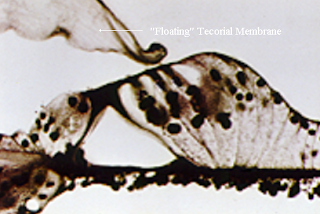
One of the important anatomists of The University of São Paulo, Prof. Olavo Marcondes Calazans, once told me that Anatomy books have many mistakes. This happens because, during his lifetime, an anatomist studies thoroughly only a limited number of subjects. The others he copies from other books. This may help to explain why certain mistakes are sometimes repeated throughout the years. One such example is the tectorial membrane, an important part of the organ of Corti. The section seen in Fig. 1 shows a “floating” tectorial membrane, but this is a fixation artefact. Fig 1. A histological section of the organ of Corti Anderson Hilding performed precise dissections of the organ of Corti in guinea pigs and stated unequivocally that the tectorial membrane is attached both to the limbus spiralis and to Hensen’s cells. He published this in 1953! An yet most of the pictures of the inner ear continue to show a floating tectorial membrane (see Fig. 2). Fig. 2. A drawing of the organ of ...

Central Auditory Masking

In Audiology the word masking denotes the presence of a sound that interferes with another. Since we live in a world filled with sounds, there is always some masking when we are talking or listening. In some circumstances there is more masking. A good example is a cocktail party: we may be talking to one person and in the background we hear other people talking, music, waiters clashing dishes, and so on. For audiological tests we use well defined types of noise as masking devices. Most of the masking effects occur in the inner ear, but it can also occur in the central auditory pathways (the route from the inner ear to the brain). During my third and last year in Saint Louis I spent three weeks at the Research Department of the Central Institute for the Deaf, involved in audiological research. I felt that this would somehow complement my years of training and it was a very pleasant experience. Carl Sherrick, an experimental psychologist, was doing some experiments with pulsed stim...

Maimonides

(History of Medicine ... 5) His Hebrew name was Moshe ben-Maimon, in Arabic he was Musa ibn Maymun. In Latin he became Maimonides. He was an important medieval Jewish philosopher, one of the greatest Bible scholars and physicians of the Middle Ages. He was born in Córdoba, Spain, in 1135, and died in Egypt in 1204. He wrote so extensively that Abraham Joshua Heschel, a 20th Century Jewish philosopher, used to say that “if we did not know that Maimonides is the name of a man, we might think it was the name of a university.” When the Almohads conquered Córdoba in 1148 Maimonides’ family escaped to Morocco an then the Holy Land and then Egypt, where he later became the Sultan’s physician. He wrote ten medical books, all published in Arabic. He described many conditions including asthma, diabetes, hepatitis, and pneumonia, and emphasized moderation and a healthy life style. His treatises became influential for many generations of physicians. He knew the Arabic translations of Greek a...

Dashiell Hammett

Dashiell Hammett was the creator of the “hard boiled” detective stories. As it often happens with pioneers, the quality of his work was underestimated during his life. Now he is regarded as one of the finest mystery writers of all time. Hammett left school when he was 14 years old and had several jobs: messenger, paper deliverer, night watcher, production foreman, stevedore and industrial machine operator. From 1915 to 1922 he worked for Pinkerton National Detective Agency and it was this job that supplied him many of the ideas that he used as a writer. Hammett had his own code of ethics, that transcended the ordinary laws and rules. A good example of his ethics can be observed at the end of one of his short stories, when the girl who had schemed the criminal operation is unmasked by the detective who tells us everything in the first person and does not even have a name: “No one else knows what you know...”, she said. “There is a wealth in that cellar beneath the garage. You may ...

A Color Picture in a Medical Journal

Image
I had finished my Master’s Degree thesis, at Washington University in Saint Louis, which was on histochemistry of the cochlea, and the most important finding was the presence of acid mucopolysaccharides in the vicinity of the distal ends of the internal and external cochlear hair cells following noise exposure. Dr. Walter Covell, my advisor, and I went several times to the illustration department of the WUSL Medical School and tried all sorts of tricks and all types of filters. We could not show these findings in a black and white picture. I asked Dr Covell if it would be possible to include a color picture.  He did not know, but told me that he had never seen a color picture in a Medical journal. The office of the Laryngoscope, which was edited by Dr. Theo Walsh, was next to Dr. Covell’s office at the McMillan Hospital, so we went there to check. They did not know, either, but they would check with the printers. The printers said that it would be possible to print a separat...

Avicenna

(History of Medicine ... 4) Avicenna – the Latin name of Abu Ali al-Husayn ibn Abd- Allah ibn Sina – was a Persian physician, who lived from 980 to 1037. In those days the amount of available information was more limited, which made it possible to acquire a very diversified range of knowledge. Besides being a physician, Avicenna was astronomer, chemist, geologist, psychologist, Islamic theologian and scholar, paleontologist, mathematician, physicist and poet. He wrote extensively. Forty of his books that were not lost are related to Medicine. The most famous are The Book of Healing, a scientific encyclopedia, and The Canon of Medicine, a complete textbook based on the principles of Galen and Hippocrates. The Canon of Medicine was used as a text book in the universities of Montpellier and Louvain until 1650. Among Avicenna’s “firsts”: •    The discovery of contagious and sexually transmitted diseases. •    The introduction of experimental medic...